Conference Program
May 21-23, 2026
Program Overview
The EIT 2026 conference features three days of cutting-edge research presentations, keynote speeches, workshops, and networking opportunities.
Conference Schedule
Master program grid from the conference booklet (parallel sessions by room). Times are Central (US).
Thursday - Thursday, May 21, 2026
Conference Registration
Union 2130 - The Bluffs
Welcome Reception & Light Refreshments
Union 2130 - The Bluffs
Friday - Friday, May 22, 2026
Opening Remarks / Provost Welcome
Union 2130 - The Bluffs
Breakfast & Keynote Address - Arjun Sanga (WiSys)
Union 2130 - The Bluffs
1A: Machine Learning, Document Intelligence, and Data Pipelines
Chair: Lokanath Reddy
Union 3110
1B: Cybersecurity, Prompt Injection, and Threat Detection
Chair: Sankar Das Roy
Union 3120
1C: IoT Edge Devices and Smart Sensing Platforms
Chair: Raj Kumar Devarakonda
Union 3130
1D: Biomedical AI and Clinical Decision Support
Chair: Sakib Ashiq
Union 3310
1E: Power Systems, Microgrids, and Energy Analytics
Chair: Shahin Alam
Union 3314
Coffee Break & Networking
Union 2130 - The Bluffs
2A: Computer Vision and Human-Centered Visual Intelligence
Chair: Allison Sauppe
Union 3110
2B: Cloud Platforms, SaaS, and Data Infrastructure
Chair: Elliott Forbes
Union 3120
2C: Wireless, RF, and Networked Communication Systems
Chair: Kenny Hunt
Union 3130
2D: Biomedical Devices, Wearables, and Health Monitoring
Chair: Vincent Chen
Union 3310
2E: Robotics, Autonomy, and Multi-Agent Planning
Chair: Seyed Mousavinezhad
Union 3314
Lunch
Union 2130 - The Bluffs
3A: Applied AI, Human Factors, and Intelligent Interfaces
Chair: Mao Zheng
Union 3110
3B: Cybersecurity Strategy, Defense, and Hardware Security
Chair: Rig Das
Union 3120
3C: IoT for Healthcare, Safety, and Smart Environments
Chair: Rig Das
Union 3130
3D: Signal, Image, and Computational Processing
Chair: Anne Denton
Union 3310
3E: Engineering Education, Experiential Learning, and Student Success
Chair: Kenny Hunt
Union 3314
Break & Networking
Union 2130 - The Bluffs
4A: AI for Environment, Agriculture, and Sensing
Chair: Mousam Hossain
Union 3110
4B: Cloud/Mobile Security and Distributed AI Systems
Chair: Elliott Forbes
Union 3120
4C: Neurotechnology, Epilepsy AI, and Biomedical Signal Processing
Chair: Seyed Mousavinezhad
Union 3130
4D: Intelligent Systems, Agents, and Decision Support
Chair: Raj Kumar Devarakonda
Union 3310
4E: Embedded Systems, Electronics, and Reconfigurable Computing
Chair: Debasis Dawn
Union 3314
Banquet Dinner & Evening Keynote
Union 2130 - The Bluffs
Saturday - Saturday, May 23, 2026
Breakfast & Networking
Union 2130 - The Bluffs
5A: LiDAR, Wildlife, and Road Intelligence
Chair: Joyjit Roy
Union 3110
5B: Medical Imaging, Disease Progression, and Health Risk Modeling
Chair: Rig Das
Union 3120
5C: Smart Sensors, RFID, and Human Activity Recognition
Chair: Mao Zheng
Union 3130
5D: Batteries, EV Infrastructure, and Smart Grid Security
Chair: Shahin Alam
Union 3310
5E: Explainable AI, Optimization, and Decision Support
Chair: Kenny Hunt
Union 3314
Coffee Break & Networking
Union 2130 - The Bluffs
6A: AI Applications in Biology, Language, and Audio
Chair: Seyed Mousavinezhad
Union 3110
6B: Trustworthy AI, Edge Intelligence, and Driver Safety
Chair: Joyjit Roy
Union 3120
6C: Control Systems, Chaotic Circuits, and Verification
Chair: Mao Zheng
Union 3130
6D: Antennas, RF Propagation, Sensors, and Energy Harvesting
Chair: Kamani Sneha
Union 3310
6E: Spatial Intelligence, Navigation, and Environmental AI
Chair: Viswa Bharath
Union 3314
Lunch & Conference Closing
Union 2130 - The Bluffs
Papers by Technical Session
Choose a session from the list to browse papers. Use Previous / Next, or open Browse all papers, to move between papers in that session.
Browse all papers in this session
Keynote Speakers
Keynote presentations are scheduled during breakfast on Friday and Saturday and at the Friday evening awards banquet.
Friday, May 22, 2026 · Breakfast (8:00 AM – 9:45 AM)
Powering Innovation through Partnership: WiSys - an Innovation Engine for Wisconsin
Academic research has the power to change lives and advance our society. The idea that almost everyone would be carrying around a computer in their pockets that is 5,000 times faster than a Cray-2 supercomputer from 1985 or 900 million times faster than the Apollo 11 guidance computer would have been unthinkable not long ago. Yet the process of getting those ideas out of the lab and into the hands of everyday people remains a daunting challenge. Innovative ideas have the potential for the greatest impact when they leverage insight from external partners such as manufacturers, industry organizations, and end-users.
WiSys is an innovation support organization that has been on an evolving journey for 25 years to develop a model for centering innovative people and their impactful ideas with a cohesive ecosystem to develop great ideas from academia in partnership with aligned cross-sector partners and bring those ideas into the commercial marketplace. This talk will explore ways that researchers can connect with a variety of stakeholders and will explain why connecting to those partners can lead researchers to more relevant research questions, potentially new funding opportunities, and more meaningful, real-world impact.
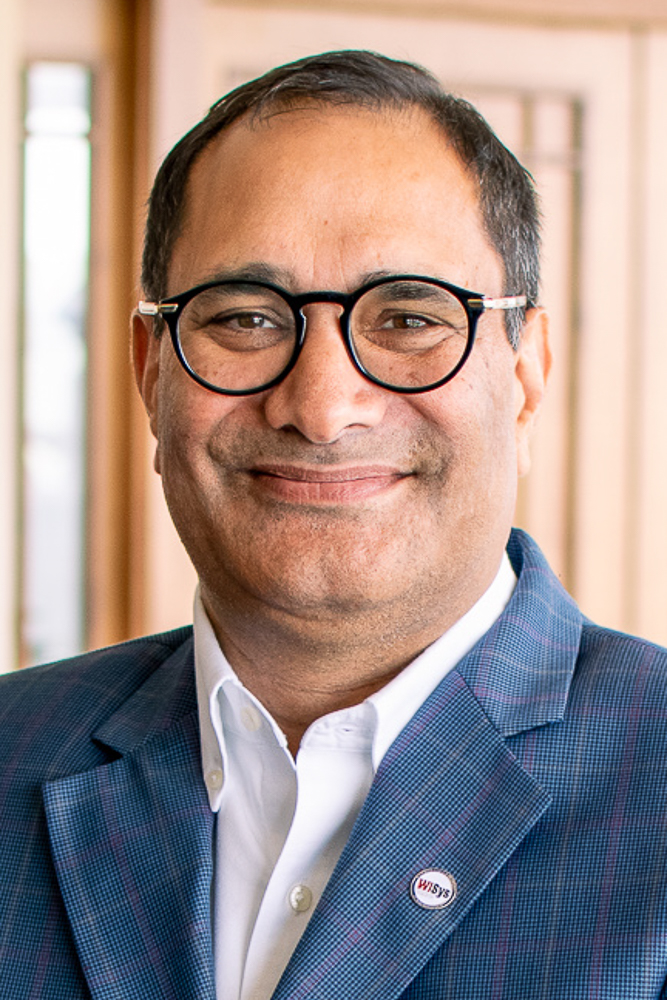
Arjun Sanga
Director, WiSys
WiSys
Arjun Sanga, president and trustee of WiSys, is an expert in innovation, ecosystem building, technology transfer, intellectual property management, and commercialization. Sanga has nearly three decades of experience building partnerships, leading research collaborations, managing intellectual property, closing licensing deals, and fostering startup companies. He spearheaded major deals and sought to balance the needs of different stakeholders, including faculty, state government, industry, and investors. A registered patent attorney, Sanga has been involved in every aspect of research administration and technology transfer, from operations to management. He has a background in chemistry and computer science. In 2023, as Principal Investigator for Wisconsin Forward Agriculture, he directed the WiSys-led coalition to win a Type 1 NSF Engine Development Award from the National Science Foundation. In 2025, he secured a Key Strategic Partner award from Governor Evers through the Wisconsin Economic Development Corporation and subsequently led the coalition to the semi-finals (top 10 percent) of the $160M NSF Type 2 Engine competition.
Friday, May 22, 2026 · Awards Banquet (6:00 PM – 8:00 PM)
So, you want to build a data center?
Modern data centers operate at extraordinary scale, requiring massive electrical infrastructure, multimegawatt power distribution, and increasingly complex strategies for cooling and heat rejection. Yet building a modern data center is not just about adding more power and more cooling - it is about understanding how much useful computing work the facility can support, often measured in queries, inferences, or tokens. As computing density and AI workloads increase, successful designs that maximize compute increasingly depend on aligning IT hardware choices, workload patterns, and cooling strategies from the very beginning.
This presentation examines the technical demands behind these facilities and highlights the engineering realities of building and operating data centers that support today’s digital and AI-driven applications.
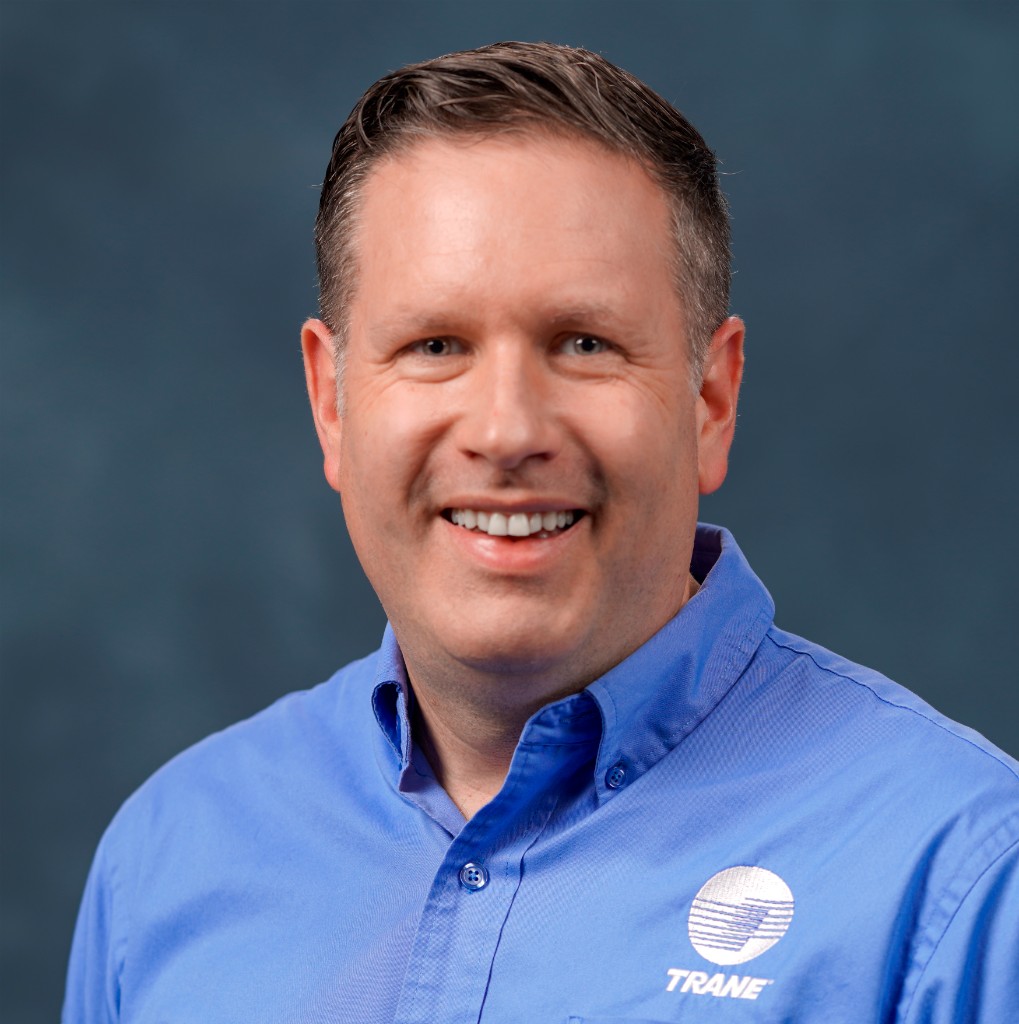
Benjamin Sykora
Applications Engineer
Trane Technologies
Ben is an Applications Engineer at Trane, specializing in commercial HVAC equipment, heat pumps, and geothermal systems. He has also worked as a power electronics engineer at Trane, developing motors and variable speed drives for next-generation HVAC compressors and fans. A Wisconsin native, Ben served six years as a “nuke electrician's mate” on a US Navy submarine. He holds a master’s degree in electrical engineering, is a certified Professional Engineer, and has 15 patents. Ben lives in La Crosse, Wisconsin, with his wife and daughter.
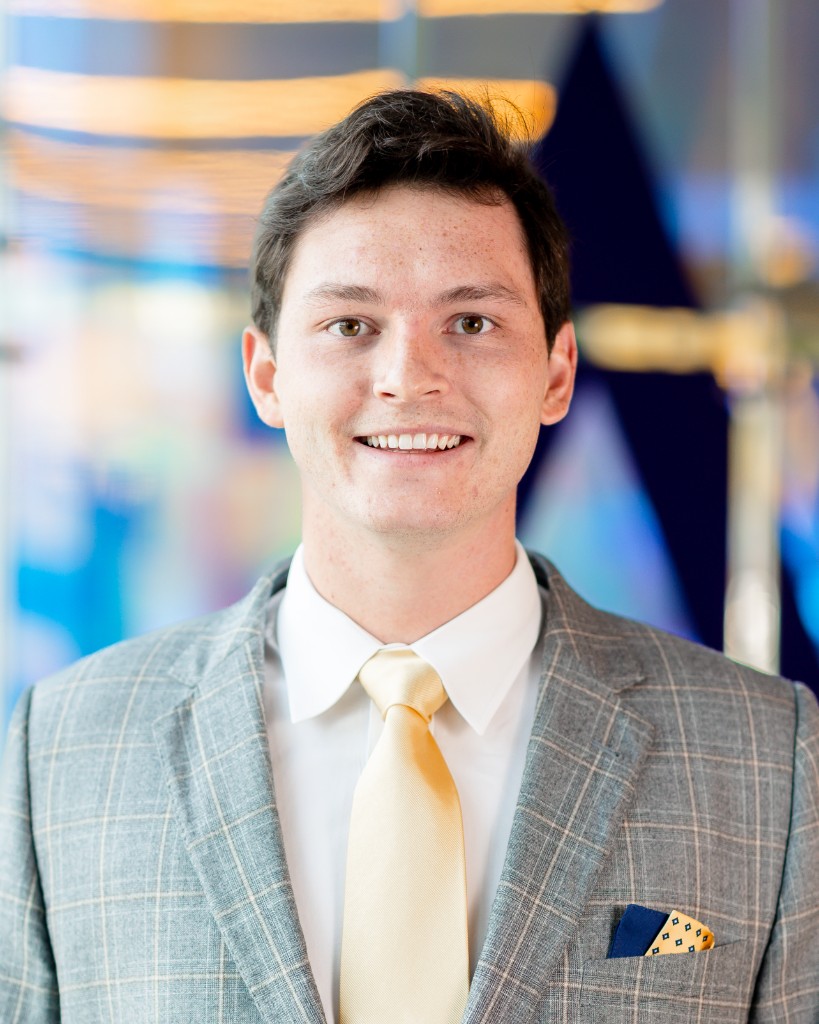
Reuben Trane
HVAC Systems Development Engineer
Trane Technologies
Reuben is an HVAC Systems Development Engineer at Trane, specializing in physics-based modelling and system-level control, particularly for data center systems. He recently completed the Engineering Accelerated Development Program at Trane working as a Lab Engineer (testing and designing residential HVAC units), Applications Engineer (modelling how to size heat recovery units), and finally as a Systems Development Engineer (modelling the energy usage of data center facilities). Reuben graduated from Purdue University in 2023 with a degree in Aeronautical and Astronautical Engineering. He lives in La Crescent, Minnesota, on a family farm where he takes care of his chickens and enjoys landscaping and woodworking.
Saturday, May 23, 2026 · Breakfast (8:00 AM – 9:45 AM)
Knowing Where the Propellant Is: Sensor Fusion for Spacecraft Fluid Management in Microgravity
Reliable knowledge of propellant location, fill fraction, and ullage behavior remains a major challenge in low gravity, where conventional level sensors fail and fluid configurations depend on vehicle dynamics, wetting, and thermal state. This talk presents work on sensor fusion for microgravity propellant management, centered on Modal Propellant Gauging (MPG) and related test platforms. By combining structural-acoustic measurements, pressure and temperature data, and vehicle dynamics information, we improve inference of tank conditions relevant to spaceflight operations.
The presentation will address the underlying physics, the use of piezoelectric transducers to interrogate tank dynamics, and the challenge of extracting fluid-state information from coupled structural and fluid responses. It will also connect laboratory experiments, flight testing, and NASA mission needs as a case study in sensing architectures for autonomous operation where direct measurement is not possible.
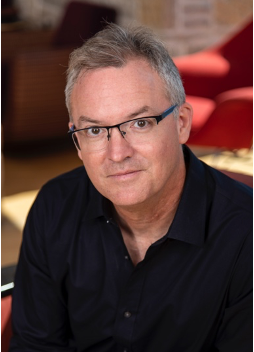
Kevin M. Crosby
Professor of Physics, Astronomy, and Computer Science; Hedberg Distinguished Professor of Entrepreneurial Studies
Carthage College; Director, NASA Wisconsin Space Grant Consortium
Professor Kevin M. Crosby is a distinguished physicist and educator at Carthage College, where he directs the NASA Wisconsin Space Grant Consortium and founded and leads Carthage's Space Sciences program, guiding students in hands-on research involving parabolic flight experiments, suborbital rocket missions, CubeSat projects, and innovative low-gravity fluid dynamics studies. His primary research centers on propellant management for spacecraft, particularly the development and validation of Modal Propellant Gauging (MPG) - a non-invasive, vibration-based technique for precise measurement of liquid propellant mass in microgravity - addressing critical challenges for long-duration human spaceflight, on-orbit refueling, lunar and planetary missions, and related areas such as slosh dynamics and ullage management. Conducted in close partnership with NASA Kennedy Space Center and Johnson Space Center, his work has been tested across platforms including NASA parabolic aircraft, Blue Origin New Shepard vehicles, and sounding rockets. Under his leadership, student teams have earned prestigious recognitions, including the Lemelson-MIT Student Prize in 2020 and NASA's TechLeap Prize in 2025. Crosby holds a Ph.D. in Physics from Colorado State University, an M.S. in Physics from the University of California, Davis, and a B.A. in Physics from Beloit College.
Program Updates
The program is subject to change. Please check back regularly for the most up-to-date information.